
Tips For Choosing Tile You'll Love
Updated: May 12

Choosing tile seems simple until you realize how permanent the decision is.
Most people focus on how the tile looks in the moment. Fewer think about how it will live over time. How it wears, how it cleans, and whether it will still feel right in five years.
If you want to avoid common regrets, the goal is not just to pick something beautiful. It is to choose something that performs as well as it looks.
Picking tile can be a bit like jewelry- you can go classic and restrained, or make a big, bold statement. For me, going to look at tile is a bit like being a kid in a candy store- so much to look at, but it can be a bit overwhelming knowing which one(s) to pick. Read on for tips on how to make choosing the right tiles more manageable.
Tone-on-tone tiles are perhaps not the most exciting to pick out, but take a look at the result in the serene, spa-like shower above. The popularity of Zellige-type tiles has led to some great, beautifully designed single colored bathrooms with depth and dimension. A look that is difficult to achieve with tiles that are a single, homogeneous color. This is a great choice for a style that will endure the test of time and will be difficult to tire of.

4 Key Factors to Consider When Choosing Tile:
Before getting into materials or styles, filter every decision through these four factors:
Durability: Where is the tile going?- Floors, showers, and high traffic areas need materials that can handle daily use.
Maintenance: Some materials require regular sealing and specialized care. Others are nearly maintenance-free.
Cost: Material is only part of the equation. Installation and long-term upkeep matter just as much.
Aesthetic longevity: Will you still like it in five years, or is it tied to a current trend?
Every tile choice is a tradeoff between these.
Perhaps one of the most frequent mistakes I see people make is liking so many that they try incorporating them all in the same area. That rarely makes for good design. If there are a few fun ones you are in love with, I suggest taking the one you favor most and building around it. This means limiting yourself to 1 'fun' tile per room and selecting others to support it.
Another tip is to be mindful of the scale you choose. Bathrooms in particular have several different tiles. Shower walls, shower floor, baseboard, backsplash, walls & floor are all candidates for tile, and it is important to choose sizes carefully. For example, if 12x24 tiles are chosen for a shower wall, it can become tiresome if the same size (especially in a different pattern) is chosen for the bath floor. The bathroom below is a great example where using different scaled but the same color tile adds a visual interest and cohesiveness, and you may not even recognize why it feels that way until you begin to pick it apart.

If you have a bold tile you absolutely fall in love with, it is a good idea to incorporate it in small doses. Choosing an accent wall in a powder room can be a great way to show off bold tiles, or t use them as a splash or shower runner in a larger bathroom. Another key to choosing bold tiles is selecting from a color you are consistently drawn to. If the color of the tile consists primarily of a color, or an intensity (i.e., bright colors or conversely, muted colors) you would never choose to wear, there is a high probability that you will tire of that tile way before you can afford to replace it.
Porcelain vs Natural Stone Tile: Key Differences to Know
One of the most important decisions you will make is the material itself.
Porcelain and natural stone can achieve a similar look, but they perform very differently over time.
Tile Cost Comparison: Porcelain vs Natural Stone
Natural stone typically comes at a premium. Natural stone such as marble is often 20 to 50 percent more when factoring in material, labor, and sealing. Porcelain is more cost-effective and predictable to install. Stone also comes with ongoing maintenance costs, which add up over time.
Tile Maintenance Differences: Porcelain vs Stone
This is the part most people underestimate.
Porcelain:
Non porous
Resists staining
Easy to clean with standard products
Natural stone, especially tumbled marble:
Requires regular sealing
More porous and absorbent
Texture can trap moisture, soap, and buildup
Tumbled marble has a soft, aged surface with natural variation and small pits. That texture is part of its appeal, but it also requires more effort to maintain. Tumbled stone hides wear well, but it is not lower maintenance.
Design Differences: Porcelain vs Natural Stone
Natural stone:
Unique variation and depth
Organic and less uniform
Develops patina over time
Porcelain:
More controlled and consistent
Can closely mimic stone
Cleaner and more uniform finish
There is no universal better option. It depends on whether you value variation or consistency.

Porcelain vs Stone in Real Bathroom Projects:

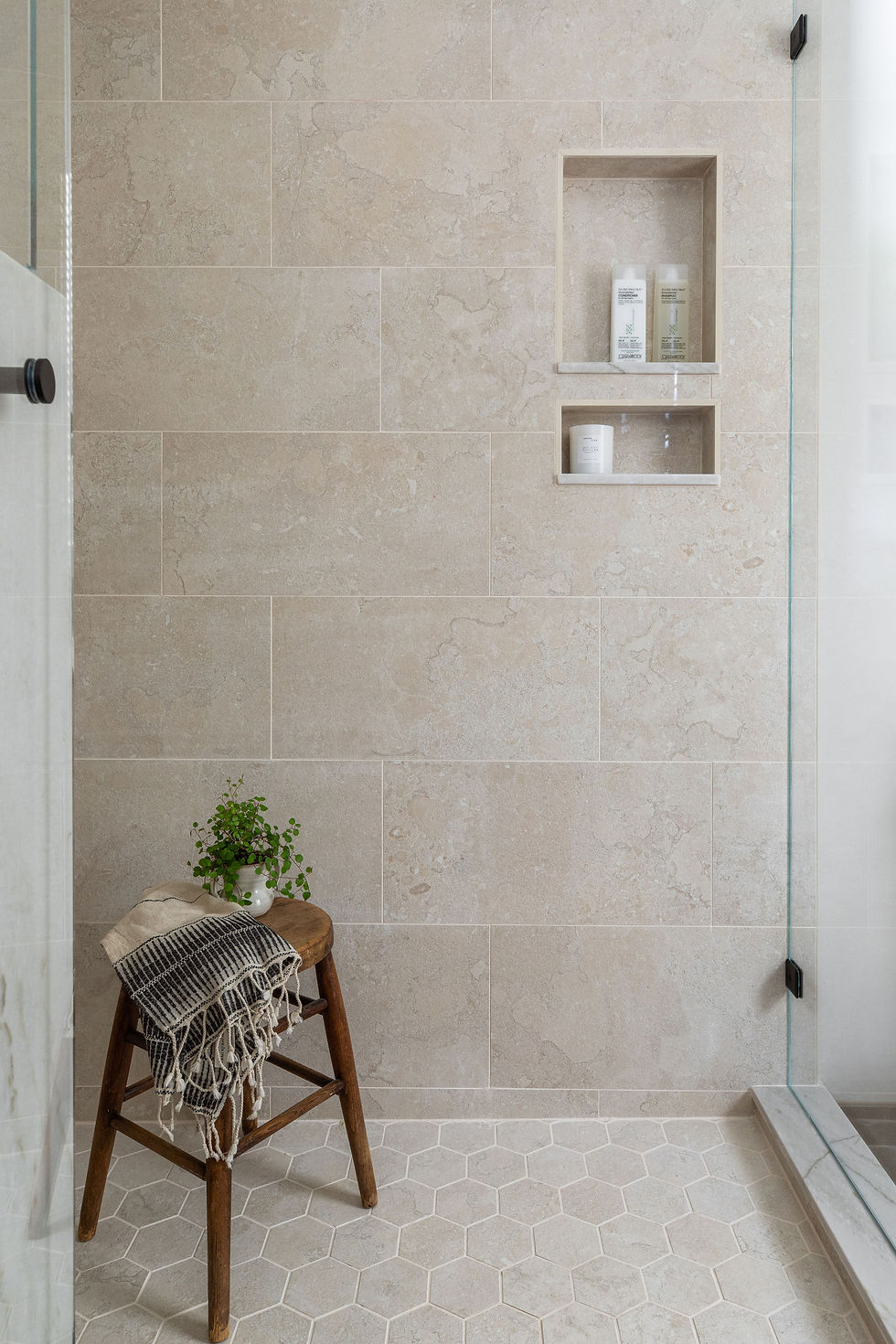
Natural Stone Shower with Tumbled Marble
This shower uses tumbled marble to create a soft and timeless look.
Why it works:
Neutral tones that will not date quickly
Texture adds depth without relying on trend-driven patterns
Tradeoffs:
Requires sealing
More hands-on maintenance
The surface will evolve over time rather than stay perfect
Porcelain Shower
This shower achieves a similar calm, elevated look with porcelain.
Why it works:
Clean and consistent finish
Durable and low maintenance
Ideal for everyday use
Tradeoffs:
Less natural variation compared to real stone
Is Marble a Good Long-Term Choice:
Natural stone has a kind of permanence that manufactured materials cannot fully replicate.
Marble has been used outdoors across Europe for centuries and in some cases thousands of years. It still exists today, not untouched, but evolved. It weathers, softens, and develops a patina over time.
That same quality carries into interior spaces. If you choose marble, you are not choosing a surface that stays pristine. You are choosing one that changes slightly with use. Etching, soft wear, and variation become part of the material.
If you want something that looks the same in ten years, porcelain is the better fit. If you value character and a lived-in feel, marble offers something porcelain cannot replicate.
In a tumbled marble shower, that softness and variation are intentional. It is designed to look better with time, not just on day one.
How to Choose a Timeless Tile That Will Not Date
Trends move quickly. Tile does not.
A few guidelines that consistently hold up:
Stick to neutral base materials in permanent areas such as floors and showers
Use texture for interest instead of bold patterns
Be cautious with highly specific shapes or layouts
Save trend-driven choices for areas that are easier to update
What to Look for When Shopping for Tile in Showrooms
After walking through Arizona Tile, a few patterns stood out:
Many tiles look great in small samples but feel overwhelming at scale
Highly patterned options tend to dominate a space quickly
The most versatile choices were neutral, textured, and understated
What works in real homes is usually not the most eye-catching option in the showroom. It is the one that supports the space without overpowering it.
Frequently Asked Questions About Choosing Tile
What is the difference between porcelain and ceramic tile?making it more durable and better suited
Porcelain is denser and less porous than ceramic, which makes it more durable and better for wet areas like showers and floors. Ceramic is more affordable and easier to work with, but better suited for lighter-use spaces.
What is the most durable grout for tile?
Epoxy grout is the most durable and stain-resistant option. It does not require sealing and resists moisture, mold, and discoloration. Cement-based grout is more affordable but porous, which means it needs sealing and more upkeep over time.
How to choose the right grout color for tile:
Matching grout creates a seamless look, while contrasting grout highlights the tile pattern. Mid-tone grout is often the most forgiving for everyday wear. For a timeless result, avoid high contrast combinations that can feel trend-driven.
Are large-format tiles slippery on floors?
Slip resistance depends on the finish, not just the tile's size. Many large-format tiles are available in matte or textured finishes that improve traction. Look for tiles rated for floor use in bathrooms or wet areas.
What are zellige tiles?
Zellige tiles are handmade clay tiles known for variation in color, texture, and glaze.
They are intentionally imperfect, which creates depth and movement but less uniformity than machine-made tile.
Is natural stone tile hard to maintain?
Natural stone requires more maintenance than porcelain. It typically needs sealing and more careful cleaning, but it also develops character over time.
What tile is best for showers?
Porcelain is often the most practical choice for showers because it is non-porous and low-maintenance.
Natural stone can also be used, but it requires sealing and more upkeep.
What tile trends should you avoid?
Highly specific patterns, bold shapes, and overly trendy colors tend to date quickly.
Neutral tones and simple layouts tend to hold up better over time.
Final Thoughts on Choosing the Right Tile
A great tile choice is not just about how it looks on install day. It is about how it performs, how it ages, and whether it still feels right years later. Both porcelain and natural stone can create a timeless space when used well. The key is choosing the one that aligns with how you want to live.
What do you think? What questions do you have about picking out tile? Ask us below!

Lisa


Comments